Japanese maples: choosing a cultivar and finding the right spot
4 min read
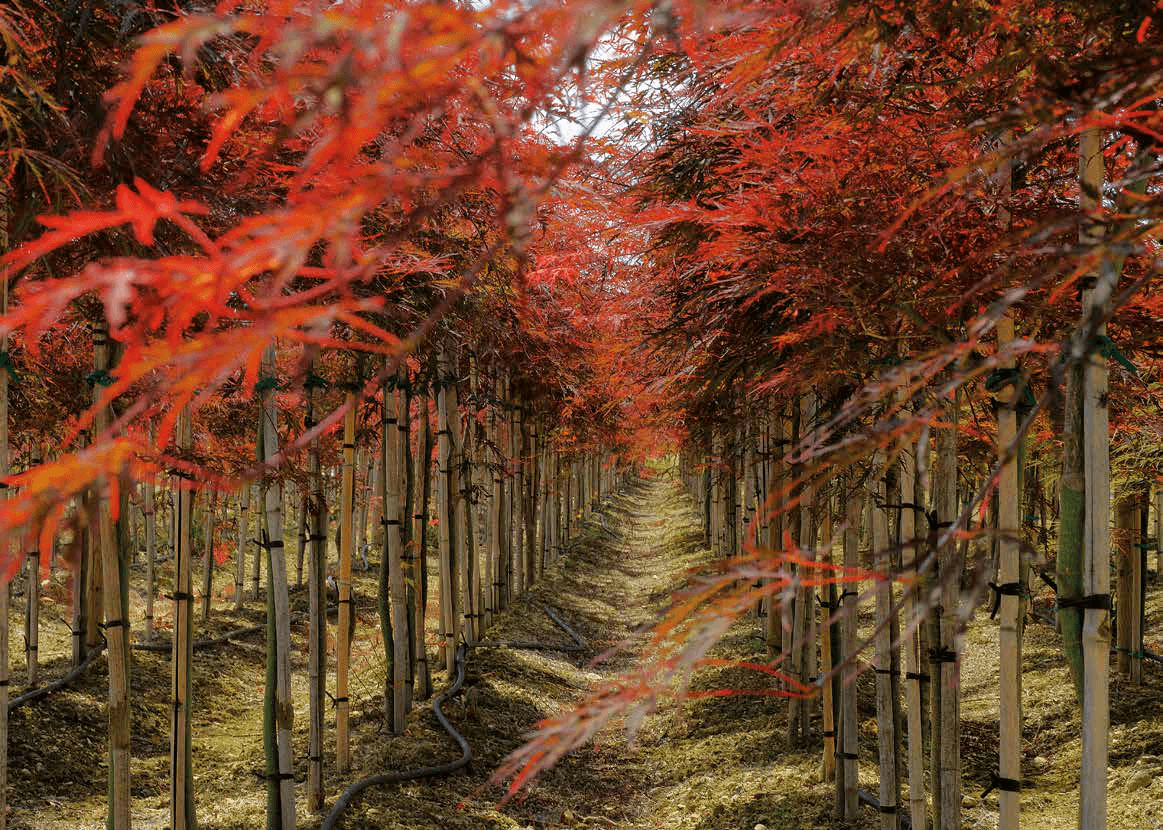
Acer palmatum in Croatian gardens: sun and shade, leaf scorch, soil pH, container culture, and which cultivars stay small enough for a town garden.
Acer palmatum is the plant people buy twice: once because they saw one in October, and again two years later because the first one browned off in July. Japanese maples are not difficult, but they are specific. Almost everything that goes wrong with them in Croatian gardens comes down to three things — too much afternoon sun, dry air moving across the leaf, and roots sitting in soil that is either waterlogged or bone dry. Get the position right and the tree asks for very little afterwards.
Where to plant: light, wind and leaf scorch
The usable rule is morning sun, afternoon shade. In continental Croatia a maple on the east side of a house, or under the high canopy of an older tree, colours well and never burns. On the coast and in Istria the shade has to be more generous still: full midday sun in August, on top of dry bura air, will crisp the leaf margins of almost any cultivar before the month is out. Scorch is not a disease and it does not kill the tree, but the burnt margin stays until leaf fall and the autumn display is lost with it.
Wind matters as much as sun and is more often overlooked. The finely cut leaves of the dissectum group are a great deal of edge for very little leaf area, and they desiccate quickly in moving dry air. A maple in a sheltered courtyard in full sun will often do better than one in half shade on an exposed corner. Green and variegated cultivars are the most sun-sensitive; the deep red-purple forms such as 'Bloodgood' stand up best to strong light, while green cultivars grown for autumn colour, 'Osakazuki' among them, want the shadier half of the range.
Soil, water and pH
Acer palmatum wants an acid to neutral soil, moist but sharply drained, with organic matter in the top layer where the roots actually are — the root system is shallow and fibrous and lives in the first 30 to 40 cm. On the limestone soils of the coast and the karst, and on many continental soils over marl, the pH is too high and the leaf goes pale between the veins. That is chlorosis, and it is better prevented than treated: plant into a generously prepared area of acidic substrate, or grow the tree in a container where the medium stays under control.
- Never plant deeper than the tree stood in its container; a buried collar is a common slow killer.
- Mulch with 5 to 8 cm of pine bark or leaf mould, kept clear of the trunk, to keep the shallow roots cool.
- Do not cultivate or hoe under the canopy; the feeding roots are directly beneath the surface.
- Water through July and August for the first three summers, deeply and less often rather than a little every evening.
- Prune only in late autumn or midwinter, in full dormancy; cut in spring and the tree bleeds heavily.
Cultivars for a small garden
Most upright Acer palmatum cultivars settle at 3 to 5 m after twenty years in our conditions, which is small enough for a town garden and a good deal smaller than the species suggests. 'Bloodgood' is the standard deep purple-red, the most sun-tolerant of the common reds and the one to specify where a single strongly coloured tree is wanted. 'Osakazuki' is plain green all summer and turns clean scarlet in October, the best autumn colour of any maple we grow. 'Sango Kaku' earns its place in winter, when the bare young wood is coral red against snow or a grey wall. 'Orange Dream' flushes orange-yellow in spring and settles to a soft yellow-green; it needs shade from midday, but in the right position it lifts a dark corner for the whole season.
Cut-leaf forms and growing in a pot
The dissectum group is a different plant in habit: low, domed, weeping and slower, most reaching 1.5 to 2 m in height and rather more in width after many years. These are the maples for a container, for the top of a retaining wall, or for a place where they can be looked down on. In a pot, give a dissectum at least 40 to 50 litres, use a loam-based acidic mix with added bark and grit, and stand it out of the afternoon sun. The vulnerable point is winter: a rootball in a pot freezes far harder than the same roots in the ground, so move the container against a wall or sink it into a border for the coldest weeks. 'Shishigashira' is the exception here — upright, stiff, with crimped leaves held in tight rosettes, and the toughest of the group both in sun and in a pot.
Autumn colour is the reason most of these trees are bought, so it is worth saying that it is not entirely in the gardener's hands. The intensity depends on the season: a dry late summer followed by cool, bright October nights gives the strongest colour, a warm wet autumn gives a muddy one. What can be controlled is the condition of the tree going into September. A maple kept evenly moist and unscorched through August will colour; one that has been dry and burnt has already dropped half its leaves before the colour would have arrived.
More from the journal
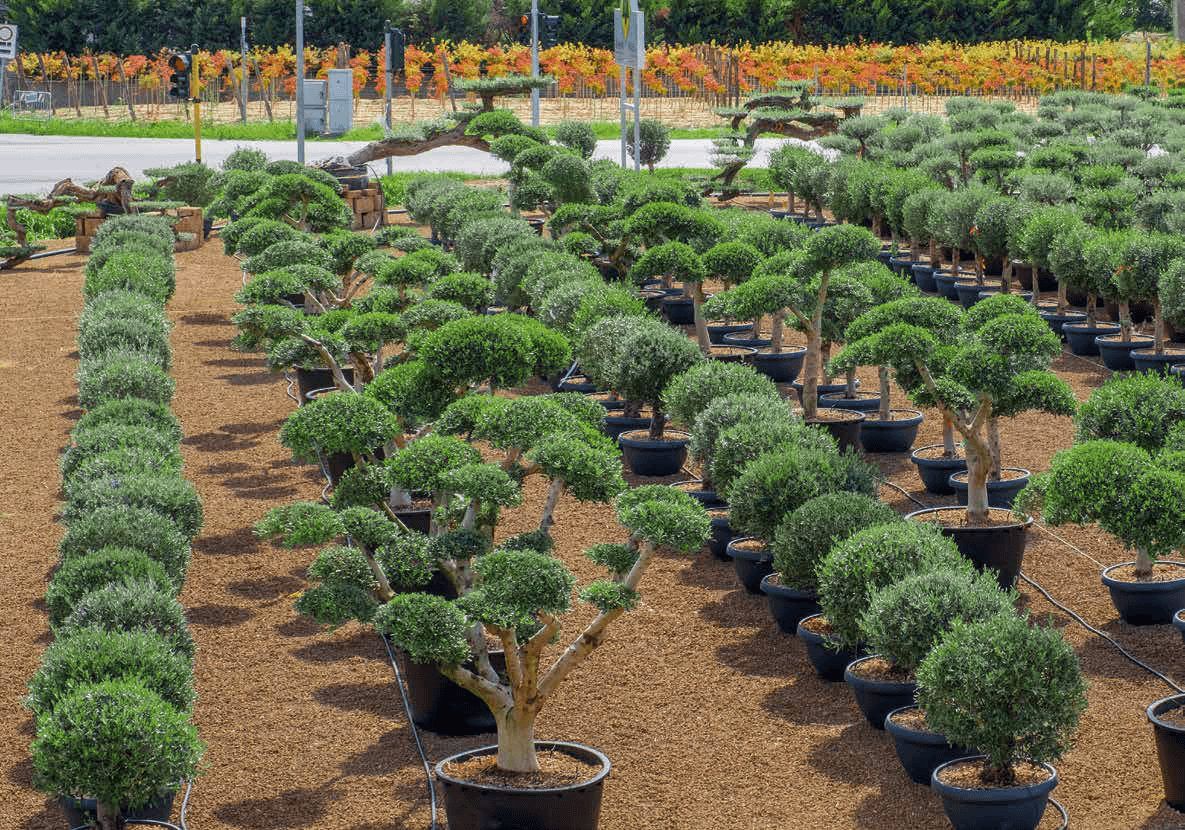
The olive in the garden: coast, container and continental frost
How Olea europaea behaves in Croatian gardens — the coast, the wet continental interior, container culture, pruning, and what a mature specimen actually buys you.
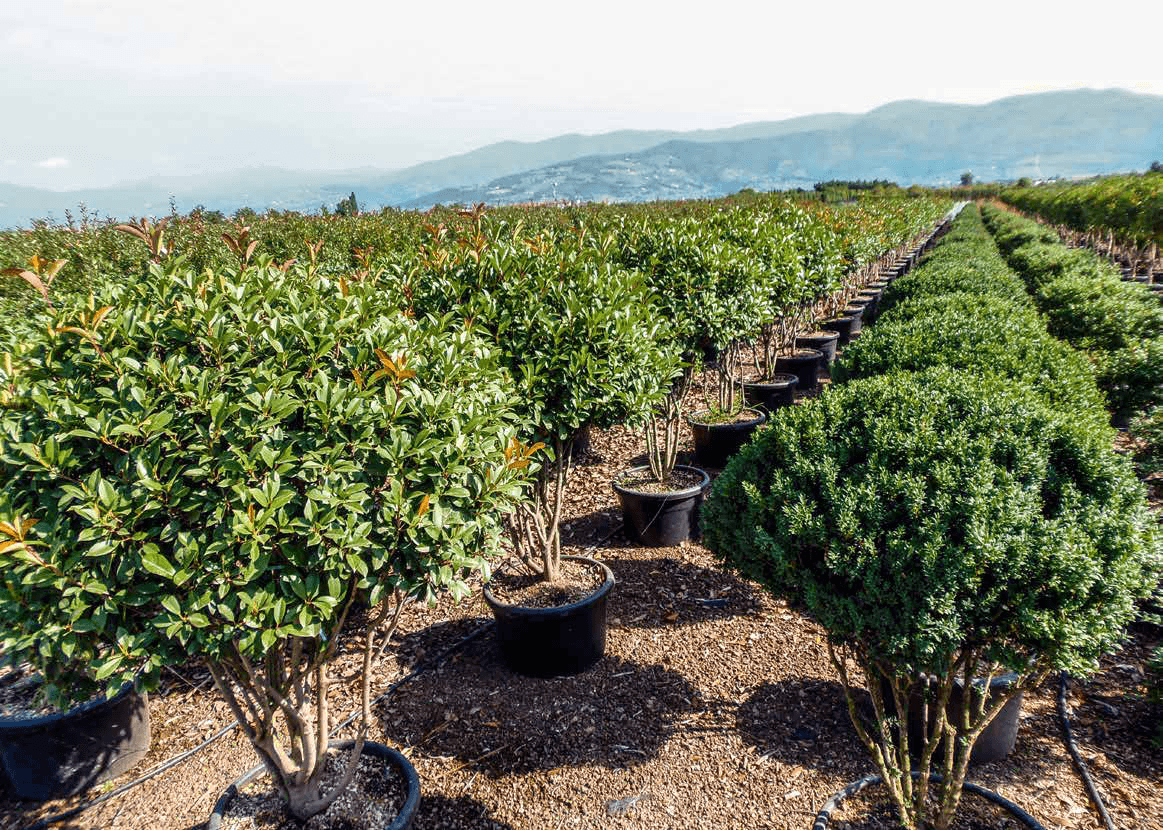
Choosing plants for a hedge: screening, clipping and coastal wind
Which hedging plants suit which job — fast evergreen screening, a formal clipped line, or a windbreak on the coast — with spacing, clipping months and honest trade-offs.